Thomala Seva is one of the most enchanting and visually captivating rituals performed at the sacred Sri Venkateswara Swamy Temple in Tirumala, Andhra Pradesh. This divine service involves the elaborate decoration of Lord Venkateswara with fresh, fragrant flowers, transforming the deity into a breathtaking spectacle of natural beauty and spiritual grandeur.
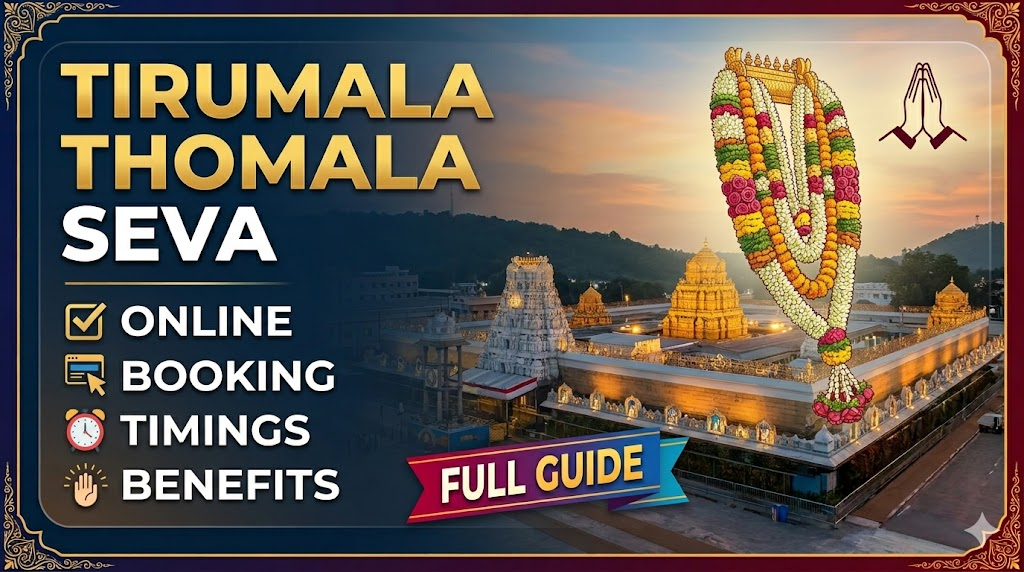
The word “Thomala” literally translates to “flower decoration” or “garland service,” and this ritual represents the deep devotion of offering the finest of nature’s creations to the Supreme Lord. Every morning, skilled temple priests adorn the deity with intricate floral arrangements, creating a mesmerizing sight that leaves devotees spellbound.
This seva holds a special place in the daily worship schedule of the temple, occurring after the Suprabhata Seva and before the Archana. The ritual is not merely about aesthetic decoration but carries profound spiritual significance, symbolizing the devotee’s offering of love, purity, and devotion to the Divine.
For pilgrims visiting Tirumala, witnessing Thomala Seva is considered a blessed opportunity, as it offers an intimate glimpse of the Lord in His most beautifully adorned form. The combination of fresh jasmine, marigold, roses, and other seasonal flowers creates an atmosphere of divine fragrance and visual splendor that remains etched in memory forever.
Tirumala Thomala Seva 2026: Online Booking Process, Timings and Benefits
Historical Significance of Thomala Seva
The tradition of decorating deities with flowers dates back to ancient Vedic times and has been an integral part of Hindu worship for millennia. At Tirumala, the Thomala Seva tradition has been meticulously preserved for centuries, following the guidelines established by ancient temple authorities.
| Historical Aspect | Details |
|---|---|
| Origin Period | Several centuries ago, during temple establishment |
| Scriptural Basis | Agama Shastras, Vaikhanasa traditions |
| First Recorded Performance | Medieval period under Vijayanagara patronage |
| Floral Tradition | Continuous daily practice for hundreds of years |
Historical records indicate that the Vijayanagara kings, particularly Sri Krishnadevaraya, were great patrons of temple arts and took special interest in the floral decoration traditions. They endowed vast lands for flower gardens to ensure a continuous supply of fresh blooms for the Lord’s service.
The tradition gained further prominence during the 16th and 17th centuries when the temple received royal patronage from various South Indian dynasties. These rulers understood that offering flowers to the Lord was not just ritualistic but represented the highest form of devotion—offering something beautiful and perishable to the eternal Divine.
The continuity of this practice for centuries demonstrates the unwavering commitment of the temple administration to preserve ancient customs. Even during challenging times, the Thomala Seva has never been interrupted, making it one of the most consistently performed rituals in the temple’s daily schedule.
Spiritual Meaning and Symbolism
Thomala Seva is rich in spiritual symbolism, with every aspect of the ritual carrying deep philosophical meaning. The flowers used in the decoration represent various qualities that a devotee should cultivate.
Symbolic Interpretations:
| Element | Symbolism | Spiritual Teaching |
|---|---|---|
| Fresh Flowers | Purity and newness of devotion | Approach God with a fresh, pure heart daily |
| Fragrance | Spread of divine virtues | Let goodness permeate your surroundings |
| Variety of Blooms | Unity in diversity | All paths lead to the Divine |
| Perishable Nature | Impermanence of material world | Focus on the eternal soul |
| Morning Timing | New beginnings | Each day is an opportunity for spiritual renewal |
The act of offering flowers symbolizes the surrender of the devotee’s heart to the Lord. Just as flowers bloom, spread fragrance, and eventually wither, human life follows a similar cycle. The ritual teaches devotees to offer their best to God while they are in their prime.
Philosophical Insights:
- Anitya (Impermanence): Flowers remind us that beauty and life are transient
- Bhakti (Devotion): The offering represents selfless love for the Divine
- Purity: Flowers are pure and untainted, symbolizing a clean heart
- Humility: Just as flowers bow down when laden with fragrance, devotees should remain humble
The priests who perform this seva are considered blessed, as they get to handle the sacred flowers that touch the Lord’s form. Devotees who witness this ritual are believed to absorb the positive vibrations created by the combination of fresh flowers, Vedic chants, and divine presence.
Types of Thomala Seva Available
The Tirumala Tirupati Devasthanams (TTD) offers different categories of Thomala Seva, each providing a unique experience for devotees.
| Seva Type | Timing | Special Features | Accessibility |
|---|---|---|---|
| Nija Thomala | Early Morning (5:00 AM – 6:00 AM) | Private ritual, most intimate | Limited to temple priests and special invitees |
| Archana Thomala | Morning (6:00 AM – 7:00 AM) | Combined with Archana, grand display | Available to booked devotees |
| Special Thomala | Festival days | Elaborate decorations with rare flowers | Special bookings during festivals |
| Sahasra Thomala | Occasional | Thousand-flower decoration | Rare, special sponsorship |
Nija Thomala is the most exclusive form, performed in the inner sanctum before the general Thomala Seva. This involves the most intimate decoration of the Lord and is witnessed by only a handful of privileged devotees. The flowers used here are of the highest quality and are arranged with extreme precision.
Archana Thomala is the version that most devotees get to witness. It combines the floral decoration with the Archana ritual, creating a comprehensive worship experience. The deity is adorned with multiple layers of garlands and decorative pieces, making this the most visually spectacular version.
During festivals like Brahmotsavam and Vaikunta Ekadasi, Special Thomala is performed with extraordinary grandeur. Rare and exotic flowers are imported from various regions, and the decoration extends to include elaborate floral backdrops and ornamental arrangements.
Booking Process and Registration
Securing a spot for Thomala Seva requires advance planning, as the demand for this visually stunning ritual is consistently high.
Online Booking Steps:
- Visit the official TTD website (tirupatibalaji.ap.gov.in)
- Register with a valid mobile number and email address
- Complete your profile with accurate personal details
- Navigate to the “Seva Booking” section
- Select “Thomala Seva” from the available daily sevas
- Choose your preferred date from the calendar
- Enter the number of participants (usually limited to 1-2 per ticket)
- Upload required ID proof documents
- Make payment through the secure gateway
- Download and print the confirmation voucher
Offline Booking Options:
| Location | Address | Timings | Payment Mode |
|---|---|---|---|
| Tirumala CRO | Near main temple complex | 6:00 AM – 8:00 PM | Cash/Card |
| TTD Information Centers | Major cities (Hyderabad, Chennai, Bangalore) | Regular hours | Cash/Card |
| Donor Cell | Tirumala | 9:00 AM – 5:00 PM | Special quota |
Booking Tips:
- Book at least 60-90 days in advance for regular days
- Festival period bookings open 4-6 months prior
- Create your account and keep login credentials ready
- Booking windows typically open at midnight; be prompt
- Keep alternative dates ready in case your first choice is unavailable
The TTD has implemented a transparent lottery system for high-demand periods to ensure fair distribution of opportunities. Senior citizens and differently-abled devotees may avail of special quotas with appropriate documentation.
Required Documents and Eligibility
To participate in Thomala Seva, devotees must meet specific eligibility criteria and present valid documentation.
Eligibility Requirements:
- Age: Participants must be between 10 and 70 years of age
- Physical Fitness: Able to stand or sit for the duration of the ritual (45-60 minutes)
- Dress Code: Traditional Indian attire mandatory (detailed in next section)
- Health: No contagious illnesses; general good health recommended
Mandatory Documents:
| Document | Purpose | Format Required |
|---|---|---|
| Aadhaar Card | Primary identity verification | Original + photocopy |
| Booking Confirmation | Entry authorization | Printed original |
| Passport (for NRIs) | Identity for foreign nationals | Original + visa copy |
| Age Proof | For senior citizen concessions | Original document |
| Medical Certificate | If claiming health-related assistance | From registered doctor |
Special Categories:
- Senior Citizens (60+): Eligible for priority seating and assistance
- Differently-Abled: Wheelchair access and companion allowance
- NRI/OCI Holders: Separate booking quota available
- Donors: Special consideration for major temple contributors
Verification Process:
Documents are verified at multiple checkpoints:
- Entry gate security check
- Seva hall registration desk
- Final verification before entering the viewing area
Ensure all documents are current and valid. Expired IDs or mismatched names on booking and ID proof will result in denial of entry without refund.
Dress Code and Traditional Attire
Maintaining the sanctity of the temple environment requires strict adherence to traditional dress codes during Thomala Seva.
For Male Devotees:
| Acceptable | Not Acceptable |
|---|---|
| Dhoti (pancha) with angavastram | Jeans, trousers, shorts |
| White or cream kurta-pajama | T-shirts, collared shirts |
| Traditional veshti (South Indian style) | Sleeveless tops, cargo pants |
| Simple cotton or silk upper garments | Leather belts, accessories |
For Female Devotees:
| Acceptable | Not Acceptable |
|---|---|
| Saree (cotton or silk, traditional colors) | Western dresses, skirts |
| Half-saree with proper draping | Tight-fitting leggings without kurta |
| Salwar kameez with dupatta | Sleeveless or backless outfits |
| Traditional jewelry | Heavy fashion accessories |
Color Recommendations:
| Color | Significance | Suitability |
|---|---|---|
| White/Cream | Purity, peace | Highly recommended |
| Saffron/Orange | Spirituality, renunciation | Excellent choice |
| Yellow/Gold | Prosperity, knowledge | Very suitable |
| Green | Growth, harmony | Good option |
| Red | Energy, auspiciousness | Appropriate for festivals |
Footwear Guidelines:
- Remove all footwear before entering the temple complex
- Leather items (belts, wallets, bags) are prohibited
- Carry a simple cloth bag for personal items
- Traditional wooden or plastic slippers can be worn outside the main hall
Practical Tips:
- Choose comfortable cotton fabrics as you may need to sit on the floor
- Avoid heavy embroidery that might distract from the spiritual atmosphere
- Keep jewelry minimal and traditional
- Carry a light shawl for air-conditioned seva halls
Seva Timings and Daily Schedule
Understanding the precise schedule helps devotees plan their visit and ensure they don’t miss this beautiful ritual.
Daily Thomala Seva Schedule:
| Time | Activity | Location |
|---|---|---|
| 4:00 AM | Temple opening and Suprabhata Seva | Main sanctum |
| 5:00 AM | Preparation of flowers and materials | Temple kitchen/garden area |
| 5:30 AM | Priest preparations and purification | Inner sanctum |
| 6:00 AM | Thomala Seva begins | Garbha Gruha (inner sanctum) |
| 6:30 AM | Main decoration continues | Viewable area for devotees |
| 7:00 AM | Completion of primary decoration | Main deity platform |
| 7:15 AM | Final adjustments and arathi | Seva hall |
| 7:30 AM | Thomala Seva concludes | Transition to next ritual |
Seasonal Timing Variations:
| Season | Adjusted Timing | Reason |
|---|---|---|
| Summer (Mar-Jun) | 5:30 AM – 6:30 AM | Earlier sunrise, heat management |
| Monsoon (Jul-Sep) | 6:00 AM – 7:00 AM | Adjusted for weather conditions |
| Winter (Oct-Feb) | 6:30 AM – 7:30 AM | Later sunrise, colder mornings |
Festival Special Schedules:
- Brahmotsavam: Extended Thomala with additional floral arrangements
- Vaikunta Ekadasi: Special midnight or early morning Thomala
- Kartika Masam: Daily enhanced decorations with traditional flowers
- Ugadi: New year special with auspicious flower combinations
Arrival Recommendations:
| Seva Time | Suggested Arrival | Buffer for |
|---|---|---|
| 6:00 AM | 4:30 AM – 5:00 AM | Security, darshan, seating |
| 5:30 AM (Summer) | 4:00 AM | Early morning temple procedures |
Devotees should arrive at least 1-1.5 hours before the scheduled seva time to complete security checks, find appropriate seating, and settle into the spiritual atmosphere before the ritual begins.
Rituals Performed During Thomala Seva
The Thomala Seva follows a structured sequence of rituals, each performed with precision and devotion.
Step-by-Step Ritual Process:
- Preparation Phase:
- Collection of fresh flowers from temple gardens
- Sorting and cleaning of blooms
- Threading flowers into garlands of specific lengths
- Preparation of decorative floral pieces
- Purification Ritual:
- Priests perform personal purification (achamana)
- Cleansing of the deity’s previous decorations
- Invocation prayers for successful seva
- Main Decoration Sequence:
| Stage | Description | Flowers Used |
|---|---|---|
| Mala Dharana | Main garland placement around neck | Jasmine, marigold, roses |
| Siras Decoration | Head and crown adornment | Rare, exotic flowers |
| Hasta Decoration | Hand and arm decorations | Small, delicate blooms |
| Vaksha Decoration | Chest and torso arrangements | Large, colorful flowers |
| Pada Decoration | Foot and base decoration | Traditional auspicious flowers |
- Special Arrangements:
- Vedika Decoration: Floral arrangements around the deity’s platform
- Background Decoration: Flower curtains and backdrops
- Paraphernalia Decoration: Adorning ceremonial items with flowers
- Concluding Rituals:
- Lighting of lamps and incense
- Offering of fragrant materials (gandha)
- Special prayers for the flowers’ longevity
- Distribution of flower prasadam to devotees
Duration Details:
| Phase | Time Allocated |
|---|---|
| Preparation | 30-45 minutes (before devotees enter) |
| Main Thomala | 45-60 minutes |
| Final adjustments | 10-15 minutes |
| Total experience | 1.5 – 2 hours for devotees |
The priests work with remarkable speed and artistry, creating complex floral patterns that transform the deity’s appearance into something truly divine.
Flowers Used and Their Significance
The selection of flowers for Thomala Seva is not random but follows ancient traditions where each bloom carries specific spiritual significance.
| Flower Type | Local Name | Spiritual Significance | Seasonal Availability |
|---|---|---|---|
| Jasmine | Mallipoo | Purity, divine love | Year-round |
| Marigold | Samanthi | Auspiciousness, prosperity | Year-round |
| Rose | Roja | Devotion, beauty | Year-round |
| Chrysanthemum | Sevanti | Longevity, joy | Winter months |
| Lotus | Thamarai | Spiritual enlightenment | Summer, monsoon |
| Tuberose | Rajanigandha | Night fragrance, mystery | Year-round |
| Hibiscus | Sembaruthi | Divine energy, power | Year-round |
| Oleander | Arali | Purification | Summer |
| Bakula | Magil | Ancient sacred flower | Rare, special occasions |
Special Flower Combinations:
| Occasion | Primary Flowers | Arrangement Style |
|---|---|---|
| Daily Thomala | Jasmine, marigold, rose | Traditional layered garlands |
| Friday Special | All available varieties | Elaborate, colorful display |
| Festival Thomala | Rare and exotic imports | Grand, towering arrangements |
| Kartika Month | Traditional temple flowers | Simple, fragrant style |
Flower Sourcing:
- Temple Gardens: TTD maintains extensive flower gardens around Tirumala
- Local Suppliers: Daily fresh supply from Tirupati and surrounding areas
- Special Imports: During festivals, flowers brought from Bangalore, Chennai, Kerala
- Devotee Offerings: Some devotees sponsor specific flower varieties
Quality Standards:
- Only fully bloomed, fresh flowers are used
- Wilted or damaged blooms are strictly discarded
- Flowers are never reused from previous days
- Organic growing practices preferred to avoid chemical contamination
The fragrance combination of these various flowers creates an atmosphere that devotees describe as “heavenly” and “transformative.”
Prasadam and Special Offerings
Receiving prasadam after Thomala Seva is considered particularly auspicious, as it carries the blessings of the flower-adorned Lord.
Types of Prasadam Distributed:
| Prasadam Item | Description | Spiritual Significance |
|---|---|---|
| Flower Prasadam | Small flowers from the decoration | Direct blessing from the Lord’s form |
| Teertham | Sacred water with tulsi | Purification and blessings |
| Kumkum | Sacred vermilion | Prosperity and auspiciousness |
| Vakkalapodi | Traditional herbal powder | Health and well-being |
| Laddu Prasadam | Sweet offering (if combined with other sevas) | General blessings |
Special Offering Opportunities:
| Offering Type | Cost Range | Details |
|---|---|---|
| Flower Sponsorship | ₹1,000 – ₹5,000 | Sponsor day’s flower requirements |
| Special Garland | ₹500 – ₹2,000 | Dedicated garland with your name |
| Vedika Flower Decoration | ₹2,000 – ₹10,000 | Decorate the deity’s platform |
| Annual Flower Endowment | ₹25,000+ | Permanent recognition, yearly benefits |
Collecting and Preserving Flower Prasadam:
- Receive with both hands in a respectful manner
- Carry a small clean cloth or bag for collection
- Store flower prasadam in a clean, dry place
- Many devotees preserve it in their home puja rooms
- Some press and frame the flowers as sacred mementos
Sharing Prasadam:
- Traditionally shared with family members who couldn’t attend
- Distributed to neighbors and friends as blessings
- Never wasted or discarded disrespectfully
- Can be immersed in flowing water after proper preservation period
The flower prasadam from Thomala Seva is considered especially powerful because the flowers have directly touched the Lord’s divine form and absorbed His energy.
Accommodation Options Near the Temple
For devotees attending early morning Thomala Seva, staying close to the temple complex is highly recommended.
TTD-Provided Accommodation:
| Guest House | Location | Price/Night | Distance to Temple | Booking Method |
|---|---|---|---|---|
| Sri Venkateswara Guest House | Tirumala | ₹500 – ₹2,000 | 0.5 km | Online/Offline |
| Sri Padmavathi Guest House | Tirumala | ₹500 – ₹1,500 | 0.8 km | Online/Offline |
| TTD Kalyana Mandapam Rooms | Tirumala | ₹300 – ₹800 | 1 km | Current booking |
| Choultries | Tirumala | ₹100 – ₹300 | 1-2 km | Current booking |
| Donor Complex | Tirumala | ₹1,000 – ₹3,000 | 0.3 km | Special quota |
Private Accommodation in Tirumala:
| Category | Price Range | Amenities | Best For |
|---|---|---|---|
| Budget Hotels | ₹1,500 – ₹3,000 | Basic facilities | Solo travelers, short stays |
| Mid-Range Hotels | ₹3,000 – ₹6,000 | AC, room service | Families, comfortable stay |
| Luxury Options | ₹8,000+ | Premium facilities | Special occasions, extended visits |
Tirupati Options (Lower Station):
| Type | Price Range | Travel Time to Tirumala | Best For |
|---|---|---|---|
| Budget Lodges | ₹800 – ₹2,000 | 45-60 minutes | Cost-conscious travelers |
| Hotels | ₹2,000 – ₹5,000 | 45-60 minutes | Better amenities, lower cost |
| Resorts | ₹5,000+ | 60 minutes | Leisure combined with pilgrimage |
Accommodation Tips for Thomala Seva:
- Book TTD accommodation 60-90 days in advance
- Tirumala stays are preferable for 6:00 AM seva (no early travel needed)
- If staying in Tirupati, leave by 4:00 AM to reach on time
- Free TTD buses operate from all guest houses to the temple
- Carry booking confirmation and valid ID for check-in
Transportation and How to Reach
Reaching Tirumala for Thomala Seva requires careful planning, especially given the early morning schedule.
By Air:
| Airport | Distance from Tirumala | Connectivity | Transfer Options |
|---|---|---|---|
| Tirupati (TIR) | 40 km | Domestic flights from major cities | Taxi, bus to Tirumala |
| Chennai (MAA) | 150 km | International + domestic hub | Direct bus, train, or taxi |
By Train:
| Station | Distance | Train Types | To Tirumala |
|---|---|---|---|
| Tirupati Main | 26 km from Tirumala | All categories | Bus, taxi, or private vehicle |
| Renigunta Junction | 10 km from Tirupati | Major express trains | Connect to Tirupati first |
| Chandragiri | 15 km from Tirupati | Local trains | Local bus or auto |
By Road – Ghat Routes:
| Route | Distance | Features | Best For |
|---|---|---|---|
| Alipiri Ghat Road | 18 km | 7 hairpin bends, well-maintained | Buses, cars, two-wheelers |
| Srivari Mettu (Footpath) | 3.5 km (walking) | 3,500 steps, scenic | Devotees seeking traditional climb |
| Chandragiri Ghat Road | 12 km | Alternative route, less crowded | Private vehicles |
Transportation Within Tirumala:
| Mode | Availability | Cost | Best For |
|---|---|---|---|
| Free TTD Buses | Every 10-15 minutes | Free | All devotees |
| Private Taxis | 24/7 availability | ₹300-₹600 per trip | Families, groups |
| Shared Autos | Limited | ₹50-₹100 per person | Budget travelers |
| Battery Vehicles | For senior citizens | Free/Small fee | Elderly, differently-abled |
Special Early Morning Transport:
- TTD operates special buses starting from 3:00 AM for seva participants
- Private taxis can be booked through hotel reception desks
- Two-wheeler parking available near the temple complex
- Walking from nearby guest houses is feasible and pleasant
Best Time to Attend Thomala Seva
While Thomala Seva is performed daily, certain periods offer enhanced experiences due to seasonal flowers, weather, and special occasions.
Auspicious Months:
| Month | Special Significance | Flower Availability | Crowd Level |
|---|---|---|---|
| Margasira (Nov-Dec) | Sacred month, Adi Shankara’s tradition | Winter blooms, chrysanthemums | Moderate |
| Kartika (Oct-Nov) | Festival month, daily special decorations | Wide variety available | High |
| Chaitra (Mar-Apr) | New Year, Ugadi celebrations | Spring flowers, fresh jasmine | High |
| Sravana (Jul-Aug) | Monsoon freshness, green surroundings | Rain-fed blooms | Moderate |
| Vaisakha (Apr-May) | Summer, early morning pleasant | Limited but fragrant varieties | Low |
Festival Periods – Special Thomala:
| Festival | Date/Period | Special Features |
|---|---|---|
| Brahmotsavam | September-October | Most elaborate decorations, rare flowers |
| Vaikunta Ekadasi | December-January | Midnight/early morning special Thomala |
| Ratha Saptami | January-February | Sun-themed floral arrangements |
| Ugadi | March-April | New year special decorations |
| Varalakshmi Vratam | Friday before Sravana Pournami | Goddess-themed special flowers |
Seasonal Experience Guide:
| Season | Pros | Cons | Recommendation |
|---|---|---|---|
| Summer | Less crowded, easy accommodation | Hot afternoons (35-40°C) | Good for peaceful experience |
| Monsoon | Lush green hills, fresh atmosphere | Occasional rain, slippery roads | Beautiful natural scenery |
| Winter | Pleasant weather, best flowers | Peak crowds, advance booking needed | Ideal overall experience |
Weekly Patterns:
| Day | Special Aspect | Crowd Level | Best For |
|---|---|---|---|
| Monday | Start of week, peaceful | Low | Quiet contemplation |
| Tuesday | Hanuman’s day, special energy | Moderate | Balanced experience |
| Wednesday | Mid-week, less touristy | Low | Photography, detailed observation |
| Thursday | Guru’s day, spiritual significance | Moderate | Learning, understanding rituals |
| Friday | Goddess day, elaborate decorations | High | Visual grandeur |
| Saturday | Weekend, family visits | Very High | Festive atmosphere |
| Sunday | Peak day, maximum crowd | Very High | Vibrant energy |
For the most serene Thomala experience with excellent flower displays, plan your visit during November-December on a Tuesday or Wednesday.
Costs and Donation Structure
Understanding the financial aspects helps devotees plan their pilgrimage without unexpected expenses.
Thomala Seva Ticket Costs:
| Seva Category | Price Per Person | Inclusions | Booking Window |
|---|---|---|---|
| Regular Thomala | ₹300 – ₹500 | Entry to seva, basic prasadam | 60-90 days advance |
| Special Thomala | ₹1,000 – ₹2,500 | Enhanced viewing, special prasadam | 90+ days advance |
| Festival Thomala | ₹2,000 – ₹5,000 | Premium seating, extended viewing | 4-6 months advance |
| Nija Thomala (Special) | ₹10,000+ | Inner sanctum proximity, exclusive | Special permission |
Additional Expenses:
| Category | Estimated Cost | Notes |
|---|---|---|
| Accommodation | ₹500 – ₹5,000/night | Varies by type and location |
| Transportation | ₹200 – ₹2,000 | Depends on mode and distance |
| Food | ₹200 – ₹1,000/day | Temple food economical, hotels pricier |
| Special Darshan | ₹300 | If planning additional darshan |
| Souvenirs | ₹100 – ₹2,000 | Photos, prasadam items, mementos |
| Donations | Voluntary | Hundi, specific endowments |
Donation and Endowment Options:
| Endowment Type | Minimum Amount | Benefits | Recognition |
|---|---|---|---|
| Nitya Thomala | ₹50,000+ | Permanent daily flower sponsorship | Name in temple records |
| Flower Garden Endowment | ₹1,00,000+ | Maintain temple gardens | Plaque recognition |
| Annual Thomala | ₹25,000/year | Yearly special Thomala on chosen date | Annual prasadam |
| General Hundi | Any amount | Support temple operations | Spiritual merit |
Money-Saving Tips:
- Book TTD accommodation for most economical stay
- Use free TTD buses instead of private transport
- Eat at temple annadanam (free meals) or TTD canteens
- Carry your own water bottle (refills available)
- Avoid booking through agents/middlemen—use official channels
Rules and Regulations to Follow
The TTD maintains strict discipline to preserve the spiritual atmosphere during Thomala Seva.
Behavioral Code:
| Rule | Details | Consequences of Violation |
|---|---|---|
| Silence | Maintain silence; whisper if necessary | Warning, possible removal |
| Mobile Phones | Strictly banned in seva hall | Confiscation, no refund |
| Photography | No cameras or recording devices | Ejection, legal action |
| Seating | Remain in assigned places | Removal from hall |
| Movement | No moving around during ritual | Denial of future bookings |
Prohibited Items:
| Category | Specific Items | Action |
|---|---|---|
| Electronics | Phones, cameras, tablets, smartwatches | Must deposit in lockers |
| Leather | Belts, wallets, bags, shoes | Remove before entry |
| Food | Outside snacks, packaged food | Dispose before entry |
| Intoxicants | Tobacco, alcohol, drugs | Legal action, ban |
| Inappropriate Items | Weapons, sharp objects | Security intervention |
Dress Code Enforcement:
- Strict checking at entry gates
- Devotees in improper attire denied entry
- No refund for dress code violations
- Temporary clothing rental available for minor issues (not guaranteed)
Special Guidelines:
- Do not touch or disturb ritual items
- Follow volunteer instructions promptly
- Children must remain supervised and quiet
- Do not request priests to speed up or modify rituals
- Maintain personal hygiene and cleanliness
Consequences:
- First violation: Verbal warning
- Second violation: Removal from seva hall
- Serious violation: Ban from future seva participation
- Illegal activities: Handed over to temple security/police
Photography and Mobile Phone Policies
The temple maintains strict policies regarding electronic devices during Thomala Seva.
Complete Prohibition Policy:
| Area | Mobile Policy | Camera Policy | Recording Policy |
|---|---|---|---|
| Thomala Seva Hall | Completely banned | Completely banned | Completely banned |
| Inner Sanctum Vicinity | Banned | Banned | Banned |
| Temple Outer Corridors | Allowed (silent) | Allowed (no flash) | Allowed (personal) |
| Queue Complexes | Allowed | Allowed | Allowed |
Why Strict Prohibition?
| Reason | Explanation |
|---|---|
| Spiritual Focus | Prevents distraction from divine experience |
| Preservation | Protects ancient structures from flash damage |
| Security | Maintains safety and privacy of rituals |
| Sanctity | Keeps the atmosphere pure and traditional |
| Copyright | Prevents unauthorized commercial use |
Storage Facilities:
| Facility | Location | Cost | Capacity |
|---|---|---|---|
| Free Lockers | Near main entrance | Free | Small items, phones |
| Paid Cloakroom | Multiple locations | ₹10-₹50 | Bags, cameras |
| Vehicle Storage | Parking areas | Free | Leave in locked vehicles |
Alternatives for Memories:
- Official TTD Photos: Available for purchase after seva
- Authorized Photographers: TTD-approved professionals capture key moments
- Souvenir Shops: Sell authorized deity images and framed pictures
- Mental Impressions: Many devotees prefer the meditative experience of pure observation
Compliance Tips:
- Leave phones in hotel room or vehicle
- Inform family about your unavailability during seva
- Carry a traditional watch to track time
- If emergency carry is necessary, deposit in lockers before entry
- Set phones to silent if you must keep them (for medical reasons, with permission)
The no-device policy, while initially inconvenient, ultimately enhances the spiritual experience by allowing complete immersion in the divine beauty of the flower-adorned Lord.
What to Expect During the Ceremony
Understanding the flow of Thomala Seva helps devotees prepare mentally and maximize their spiritual experience.
Pre-Ceremony Phase (Arrival to Start):
| Time Before Seva | Activity | Devotee’s Action |
|---|---|---|
| 90 minutes | Arrival at temple | Security check, document verification |
| 60 minutes | Proceed to seva area | Find seating, settle in, begin meditation |
| 30 minutes | Preparatory rituals begin | Observe quietly, absorb the atmosphere |
| 15 minutes | Final seating arrangement | Ensure comfortable position, focus attention |
During the Ceremony:
| Phase | Duration | What Happens | What Devotees Experience |
|---|---|---|---|
| Opening Invocations | 10 minutes | Ganapati puja, purification chants | Soothing mantra vibrations |
| Flower Preparation Display | 15 minutes | Priests arrange flowers, devotees see variety | Visual delight, anticipation |
| Main Decoration | 30-45 minutes | Intricate garland placement, layering | Mesmerizing artistry, divine beauty |
| Special Arrangements | 15 minutes | Crown decoration, backdrop creation | Peak visual experience |
| Final Arathi | 10 minutes | Camphor light, incense, conch sounds | Emotional culmination |
| Blessing Distribution | 10 minutes | Prasadam, teertham, flower offerings | Receiving divine grace |
Physical Environment:
- Seating: Floor seating with mats; some areas have chairs for elderly
- Lighting: Soft, warm lighting enhancing the golden decorations
- Fragrance: Overwhelming natural perfume of fresh flowers
- Temperature: Air-conditioned or naturally cool in morning hours
- Sound: Mantra chanting, bell sounds, occasional instructions
Emotional Journey:
| Stage | Common Devotional Response |
|---|---|
| Anticipation | Excitement, eagerness to see the Lord |
| First Sight | Awe, sometimes tears of joy |
| During Decoration | Deep peace, meditative absorption |
| Final Arathi | Overwhelming devotion, surrender |
| Receiving Prasadam | Gratitude, sense of blessing |
Post-Ceremony:
- Exit in an orderly, quiet manner
- Collect prasadam at designated points
- Many devotees sit in meditation in outer corridors
- Optional: Proceed for regular darshan if desired
- Take time to absorb the experience before rushing to next activity
Health and Safety Guidelines
Ensuring physical well-being is crucial for fully experiencing the spiritual beauty of Thomala Seva.
Physical Preparation:
| Aspect | Recommendation | Rationale |
|---|---|---|
| Sleep | 5-6 hours minimum | Alertness for early morning seva |
| Hydration | Drink water before entry | Limited access during ritual |
| Breakfast | Light meal after seva or 2 hours before | Comfort during 1-2 hour sitting |
| Clothing | Comfortable, breathable fabrics | Ease of sitting, temperature regulation |
Common Health Considerations:
| Condition | Precaution | Facility Available |
|---|---|---|
| Respiratory Sensitivity | Strong flower fragrance may affect some | Fresh air access points, medical aid |
| Allergies | Inform volunteers if allergic to specific flowers | Alternative seating available |
| Joint/Back Issues | Request backrest or chair seating | Special seating arrangements |
| Diabetes | Carry sugar tablets | Medical room nearby |
| Pregnancy | Consult doctor; choose less crowded days | Priority assistance available |
Safety Measures:
| Facility | Location | Purpose |
|---|---|---|
| First Aid Centers | Multiple points near temple | Immediate medical attention |
| Oxygen Cylinders | Near seva hall | Respiratory emergencies |
| Wheelchair Access | Throughout complex | Mobility assistance |
| Emergency Exits | Clearly marked | Quick evacuation if needed |
Environmental Factors:
- Flower Fragrance: While pleasant, can be intense in enclosed spaces
- Incense Smoke: Minimal during Thomala, but present
- Temperature: Early morning can be cool; carry light shawl
- Crowding: Festival days may feel congested; maintain calm
Post-Seva Care:
- Step out slowly if feeling overwhelmed by fragrance
- Drink water to stay hydrated
- Rest in outer corridors if feeling dizzy
- Avoid immediate heavy meals; start with light food
- If any health issue persists, visit temple medical facility immediately
Special Provisions for Senior Citizens and Differently-Abled
The TTD ensures that Thomala Seva is accessible to all devotees, regardless of physical limitations.
For Senior Citizens (60+ Years):
| Facility | Details | How to Request |
|---|---|---|
| Priority Seating | Front rows with back support | Show age proof at entry |
| Wheelchair Provision | Free wheelchair service | Book in advance or request on arrival |
| Special Entry Gate | Reduced walking distance | Senior citizen ID or appearance |
| Medical Assistance | Oxygen, first aid nearby | Inform volunteers of conditions |
| Companion Allowance | One attendant permitted free | Request at booking or entry |
For Differently-Abled Devotees:
| Facility | Availability | Booking Requirement |
|---|---|---|
| Ramp Access | All major entry points | None, automatic |
| Reserved Seating | Designated accessible areas | Inform at booking |
| Companion Support | One attendant allowed | Mention in booking |
| Accessible Restrooms | Near temple complex | Signage available |
| Battery Vehicles | Free transport within complex | Request at any point |
For Visually Impaired Devotees:
- Audio descriptions available through volunteer assistance
- Permitted to sit closest to the ritual area for better auditory experience
- Guide dogs not permitted; human guides allowed
- Special tactile prasadam arrangements
For Hearing-Impaired Devotees:
- Visual prominence of ritual makes it naturally accessible
- Written information sheets available
- Sign language interpreters can be requested in advance for group visits
Booking Provisions:
| Category | Quota/Concession | Documentation |
|---|---|---|
| Senior Citizens | 10% reserved quota | Age proof (Aadhaar, voter ID) |
| Differently-Abled | Special counters, companion free | Disability certificate |
| Pregnant Women | Priority seating, easy exit | Self-declaration |
| Medical Conditions | Flexible arrangements | Doctor’s certificate |
Tips for Caregivers:
- Carry all necessary medications
- Inform TTD staff about specific needs in advance
- Plan for rest periods before and after the ceremony
- Use battery-operated vehicles for transport within the complex
- Keep emergency contact numbers accessible
Nearby Temples and Additional Pilgrimage
A visit to Tirumala for Thomala Seva can be combined with other significant temples for a complete spiritual experience.
Must-Visit Nearby Temples:
| Temple | Location | Distance from Tirumala | Special Significance |
|---|---|---|---|
| Sri Padmavathi Ammavari Temple | Tiruchanur | 5 km from Tirupati | Goddess Padmavathi, consort of Lord Venkateswara |
| Sri Govindaraja Swamy Temple | Tirupati | 1 km from railway station | Ancient Vishnu temple, reclining posture |
| Sri Kapileswara Swamy Temple | Tirupati | 3 km from city | Lord Shiva, sacred waterfall |
| Sri Kalyana Venkateswara Swamy | Srinivasa Mangapuram | 12 km from Tirupati | Where Lord stayed after divine marriage |
| Sri Varahaswami Temple | Tirumala | Adjacent to main temple | Original deity of the hill, Lord Varaha |
| Sri Bedi Anjaneya Temple | Tirumala | Near main temple | Lord Hanuman in bound form |
Suggested Pilgrimage Itinerary:
Day 1 – Thomala Day:
- 4:00 AM: Wake up, prepare
- 5:00 AM: Thomala Seva at main temple
- 7:00 AM: Regular darshan, breakfast
- 9:00 AM: Visit Varahaswami Temple
- 11:00 AM: Visit Bedi Anjaneya Temple
- Afternoon: Rest, explore Tirumala
Day 2 – Surrounding Temples:
- Morning: Padmavathi Temple at Tiruchanur
- Afternoon: Govindaraja Swamy Temple
- Evening: Kapileswara Swamy Temple
Combined Seva Opportunities:
| Combined Experience | Temples | Booking |
|---|---|---|
| Thomala + Archana | Main temple | Single booking possible |
| Thomala + Darshan | Main temple | Included or separate |
| Special Festival Package | Multiple temples | TTD festival packages |
Transportation Between Temples:
| Mode | Frequency | Cost | Best For |
|---|---|---|---|
| Free TTD Buses | Every 20-30 minutes | Free | All devotees |
| Private Taxis | On call | ₹500-₹1,000/day | Families, groups |
| Auto Rickshaws | Available | ₹50-₹200 per trip | Short distances |
| Tour Packages | Daily | ₹1,000-₹3,000 | Comprehensive coverage |
Completing the circuit of these temples is believed to fulfill the complete purpose of the Tirumala pilgrimage, connecting devotees with the entire divine family of Lord Venkateswara.
Frequently Asked Questions (FAQs)
Q1: Can children attend Thomala Seva?
Children above 5 years are generally allowed, but parents must ensure they remain quiet and seated throughout the ritual. Children below 5 may be admitted with special permission but are not recommended due to the duration and discipline required.
Q2: Is Thomala Seva different from regular darshan?
Yes, significantly. Regular darshan is a brief viewing (seconds to minutes) of the deity. Thomala Seva is a 45-60 minute ritual where you witness the elaborate flower decoration process, offering a much more intimate and detailed experience of the Lord.
Q3: Can I book Thomala Seva for a group or family?
Standard bookings are typically for 1-2 persons per ticket. For larger groups, you need to book multiple tickets. Some special categories allow family bookings (up to 4 members) at higher rates. Check current TTD guidelines for group provisions.
Q4: What if I am allergic to strong flower fragrances?
Inform the volunteers at the entry point. They can arrange seating in areas with better ventilation or provide a mask. In severe cases, they may advise against participation for your health safety. Carry any allergy medication you regularly use.
Q5: Can I take photos after the seva is complete?
No. The photography prohibition applies throughout the temple’s inner areas at all times. Official TTD photographers capture the ceremony, and you can purchase authorized photos from temple shops. Outer corridors allow photography of the temple architecture, not the deity.
Q6: Is there any special benefit to attending Thomala Seva versus other sevas?
Each seva has unique spiritual significance. Thomala Seva specifically blesses devotees with beauty, purity, and freshness in life. It is particularly recommended for those seeking artistic inspiration, marital harmony, and renewal of spiritual energy. The visual experience is unmatched.
Q7: Can I donate flowers directly for the seva?
Yes, devotees can sponsor flowers or specific garlands. Contact the TTD donation office or book through the official website. Flower sponsorships start from ₹1,000 and can go up to sponsoring the entire day’s requirements. Your name will be mentioned during the ritual.
Q8: What happens if I miss my scheduled Thomala Seva?
Late arrivals are not accommodated due to the ritual’s precise timing. You may request a refund subject to TTD cancellation policies (usually 48 hours prior) or book again for another date. No same-day rescheduling is permitted.
Q9: Are there any food restrictions before attending Thomala Seva?
While not mandatory, devotees traditionally prefer to attend on an empty stomach or after light sattvic food. Avoid non-vegetarian food and alcohol at least 24 hours prior. After the seva, you can have breakfast at temple annadanam facilities or nearby eateries.
Q10: How is Thomala Seva during festivals different from regular days?
Festival Thomala is extraordinarily grand. The decorations use rare and exotic flowers, the duration may be extended, additional rituals are performed, and the visual spectacle is magnified many times. However, crowds are also much larger, and bookings need to be made months in advance.